Adsorption Calculations
Precisely calculate adsorption capacity and sites under different conditions, providing key data support for material design and performance optimization
Technical Overview
Adsorption calculations are an important molecular simulation technique used to study interactions between material surfaces and molecules. By precisely calculating adsorption capacities and sites under different conditions, we can deeply understand adsorption mechanisms, providing important theoretical basis for the design and performance optimization of new adsorption materials.
This technology is widely applied in catalyst design, gas separation, water treatment, energy storage materials, and other fields. It can effectively predict material adsorption performance, accelerate the R&D process, and reduce experimental costs.
Competitive Adsorption Analysis
Precisely calculate competitive adsorption behavior of mixed components at different ratios, evaluating material selectivity and separation performance
Adsorption Site Identification
Identify and analyze adsorption sites on material surfaces, calculate adsorption energy and binding strength at different sites
Adsorption Capacity Calculation
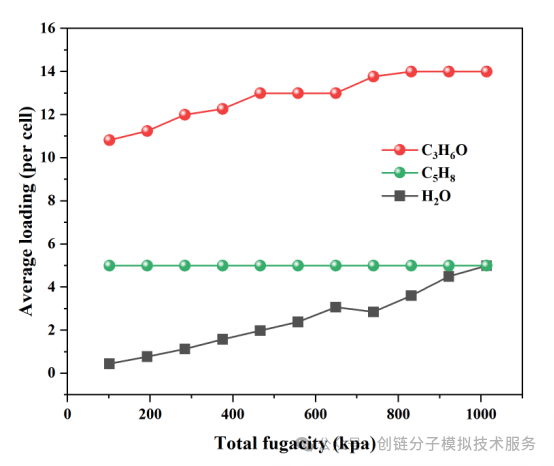
Adsorption capacity is a key indicator for evaluating adsorption material performance, including competitive adsorption of mixed components at different ratios, saturated adsorption of mixed components, saturated adsorption of single components, and other scenarios. Through molecular simulation, we can precisely calculate adsorption capacity data under different conditions.
Adsorption Performance Data
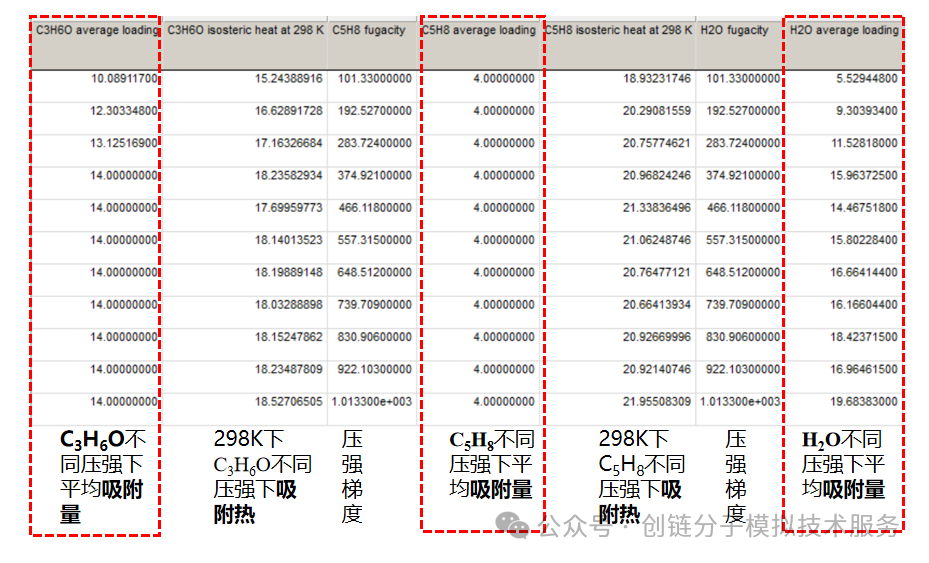
The adsorption performance data sheet provides detailed adsorption parameters of different materials under standard conditions, including adsorption capacity, selectivity coefficient, heat of adsorption, and other key indicators, providing important references for material screening and performance evaluation.
Adsorption Site Analysis
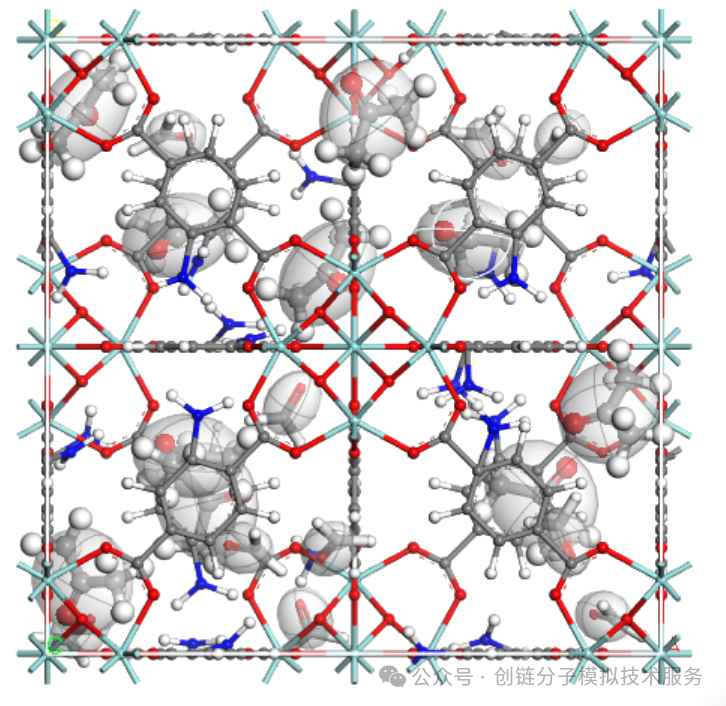
Adsorption site analysis is an important means to understand adsorption mechanisms. Through molecular simulation, we can intuitively observe the adsorption positions and binding modes of molecules on material surfaces, calculate adsorption energies at different sites, providing molecular-level guidance for material design.
Analysis Methods
Through density functional theory (DFT) calculations and molecular dynamics simulations, we can systematically analyze the following characteristics of adsorption sites:
- Geometric structure and electronic environment of adsorption sites
- Energy distribution and stability of different adsorption sites
- Adsorption configurations and binding modes of molecules at different sites
Typical Application Cases
CO2 Capture Material Design
Simulate CO2 adsorption performance of different metal oxides and carbon materials, optimize material composition and preparation conditions, develop efficient CO2 capture materials.
Gas Separation Membrane Optimization
Study competitive adsorption behavior of mixed gases in membrane materials, design gas separation membranes with high selectivity and high flux.
Catalyst Active Site Identification
Identify active adsorption sites on catalyst surfaces, analyze adsorption states of reactants at active sites, provide theoretical guidance for improving catalytic efficiency.
Technical Parameters
- Simulation Temperature Range 273-1000 K
- Pressure Range 0.01-10 MPa
- Number of Adsorption Components 1-10 types
- Adsorption Site Calculation Precision meV level
- Adsorption Isotherm Types Langmuir, Freundlich, Toth, etc.
Related Technologies
- Molecular Dynamics Simulation (Pressure Field)
- Molecular Dynamics Simulation (Electric Field)
- Free Diffusion Simulation
- Molecular Structure Property Calculation
Need Professional Support?
Our expert team can provide you with customized adsorption calculation services, helping you solve specific material design and performance prediction problems.
Contact Our ExpertsReady to Start Your Molecular Simulation Project?
Contact us to learn how to use adsorption calculation technology to accelerate your material R&D process