Molecular Dynamics Simulation (Electric Field)
Precisely simulate the movement behavior of molecules under different electric field strengths to provide key data support for material design
Technical Overview
Molecular dynamics simulation (electric field) is an advanced computational method used to study the microscopic behavior of molecules under electric field action. By accurately simulating the movement trajectory, energy changes, and structural evolution of molecules under different electric field strengths, it provides important theoretical basis for new material design and performance prediction.
This technology is widely applied in the research and development of battery materials, catalysts, separation membranes, nano-devices, etc., which can effectively predict the performance of materials in electric field environments, accelerate the R&D process and reduce experimental costs.
Electric Field Intensity Control
Precisely control electric field intensity within 0-10V/nm range to simulate material behavior under different working conditions
Diffusion Behavior Analysis
Calculate key parameters such as molecular diffusion coefficient and mean square displacement (MSD) to evaluate material transport performance
Electric Field Simulation System Schematic
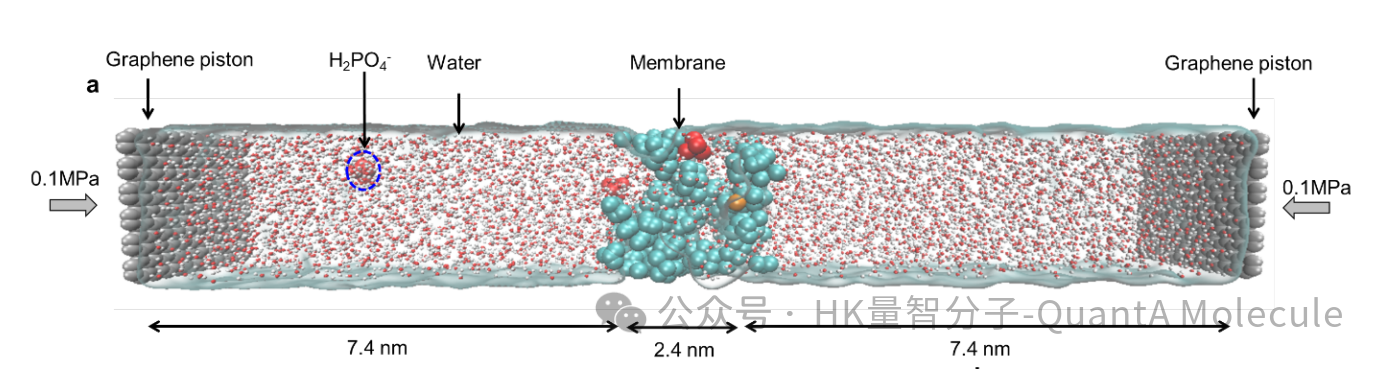
The figure below shows a typical electric field molecular dynamics simulation system, including graphene pistons, electrolyte solution, ions and water molecules. Symmetric pressure is applied to both sides of the system, forming an electric field effect in the central area, allowing observation of ion migration behavior under the action of the electric field.
Simulation system parameters: membrane thickness 2.4 nm, solution area 7.4 nm, system pressure 0.1 MPa, temperature 298 K
Molecular Distribution and Motion Trajectory
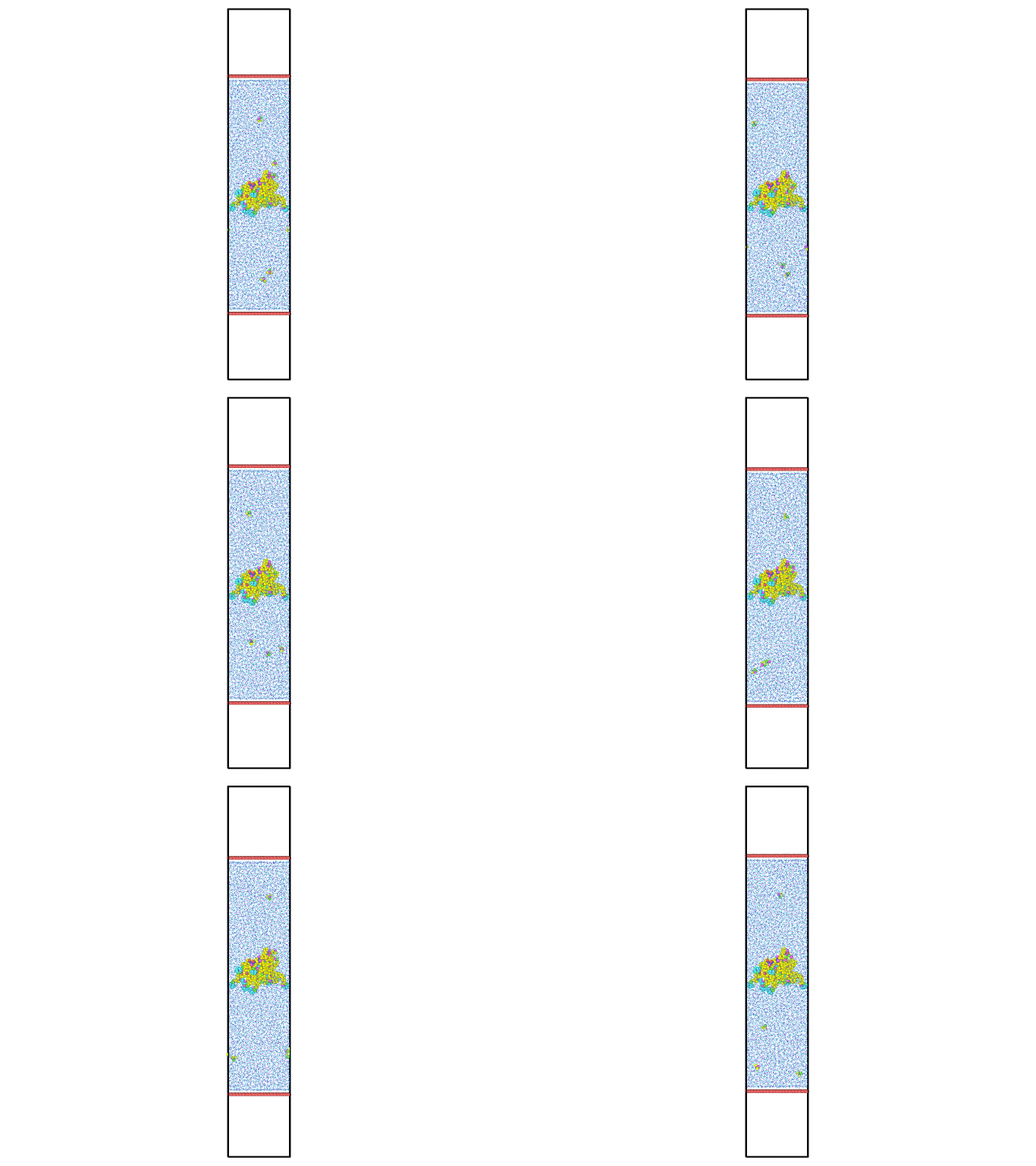
Through molecular dynamics simulation, we can intuitively observe the distribution and motion trajectory of molecules under the action of an electric field. The figure below shows the spatial distribution of different types of molecules in the electric field, with color differences representing different molecular types or charge distributions.
Key Observations
- Ions show directional migration under the action of electric field, with positive ions moving toward the negative electrode and negative ions moving toward the positive electrode
- Water molecules undergo directional arrangement in the electric field, forming ordered structural regions
- Under high electric field strength, ion migration rate increases significantly, but may lead to local structural damage
Ion Distribution in Electric Field
Under the action of electric field, the distribution of different ions presents specific patterns. The figure below shows the ion concentration distribution in the electric field, intuitively displaying the enrichment and diffusion behavior of ions under the electric field gradient.
Analysis Methods
Through radial distribution function (RDF) and spatial density distribution analysis, we can quantitatively describe the distribution characteristics of ions in the electric field, including:
- Spatial correlation between ions and ions, ions and water molecules
- Ion concentration gradient in the direction of the electric field
- Ion enrichment effect in the interface area
Typical Application Cases
Battery Material Design
Simulate the diffusion behavior of electrolyte ions in electrode materials under electric field, optimize electrode structure to improve ion transport efficiency and battery charge-discharge performance.
Separation Membrane Performance Optimization
Study the effect of electric field on the selectivity and permeability of separation membranes, design new separation membrane materials with high selectivity and high flux.
Nanodevice Charge Transport
Simulate the transport path and efficiency of charge under electric field in nanoscale devices, providing theoretical support for the design of high-performance nanoelectronic devices.
Technical Parameters
- Simulation Time Scale 1-100 ns
- Electric Field Intensity Range 0-10 V/nm
- System Temperature 273-400 K
- Pressure Range 0.1-100 MPa
- Molecular Quantity 10³-10⁵
- Spatial Resolution Sub-nanometer
Related Technologies
- Molecular Dynamics Simulation (Pressure Field)
- Adsorption Calculations
- Molecular Structure Performance Calculation
- Free Diffusion Simulation
Need Professional Support?
Our expert team can provide you with customized molecular dynamics simulation services to help you solve specific material design and performance prediction problems.
Contact Our ExpertsReady to Start Your Molecular Simulation Project?
Contact us to learn how to use molecular dynamics simulation technology to accelerate your material R&D process